
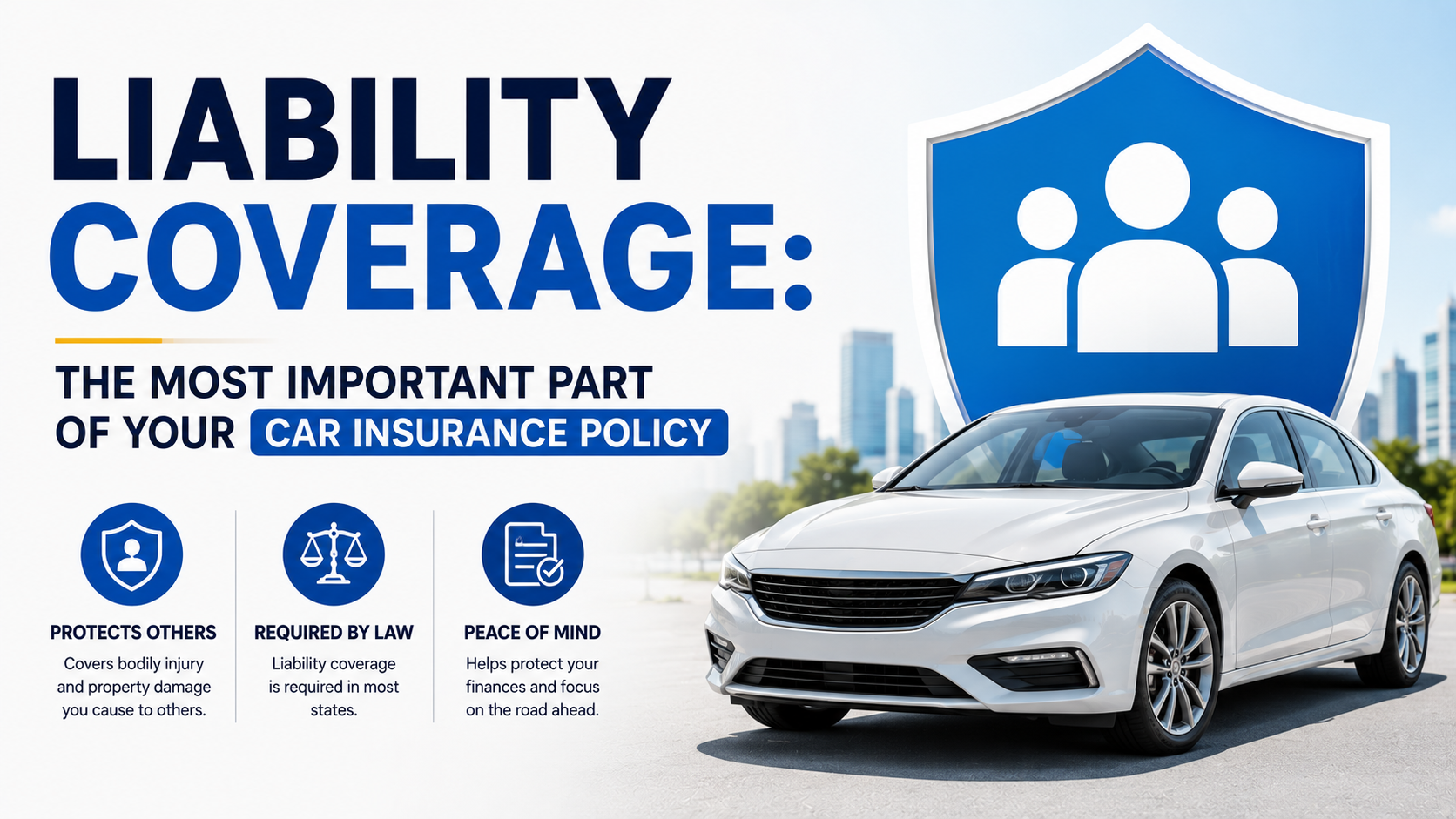
Many drivers focus on repairing their own vehicle after an accident. Insurance companies focus on something else: the damage you cause to other people. That’s where liability coverage comes in.
A single serious accident can create medical bills, legal expenses, lost wages, and property damage costs that easily exceed tens of thousands of dollars. Without adequate liability coverage, those expenses can become your personal responsibility. Understanding how liability insurance works is essential if you want real financial protection, not just the minimum policy required to drive legally.

The Core Problem: Minimum Coverage Often Isn’t Enough
Most states require drivers to carry liability insurance, but state minimum requirements are frequently far lower than the actual cost of a major accident.
Imagine causing a collision that results in multiple injuries and significant vehicle damage. Medical expenses alone can quickly exceed basic policy limits. Once your insurance coverage is exhausted, you may be responsible for the remaining costs.
Many drivers purchase the cheapest policy available without realizing the financial risks. Low premiums can seem attractive until a claim exceeds coverage limits.
Liability coverage exists to protect your assets, savings, income, and future financial stability.
Key Factors That Affect Liability Coverage Costs
Several factors influence how much you’ll pay for liability insurance.
Driving History
Insurance companies assess risk based on past behavior.
- Clean driving records generally receive lower premiums.
- Multiple violations increase rates.
- At-fault accidents often lead to higher insurance costs.
- Drivers requiring SR-22 insurance usually face elevated premiums.
Coverage Limits
Higher liability limits provide greater protection.
Common coverage structures include:
- 25/50/25
- 50/100/50
- 100/300/100
- 250/500/250
These numbers represent thousands of dollars in coverage for bodily injury and property damage claims.
Location
Drivers in densely populated areas often pay more because accident frequency tends to be higher.
Traffic congestion, repair costs, and local claim trends all affect pricing.
Vehicle Usage
The more time spent on the road, the greater the likelihood of an accident.
Insurance companies typically evaluate:
- Annual mileage
- Commuting distance
- Business use
- Personal use
Age and Experience
Less experienced drivers generally face higher premiums because they statistically file more claims.
Liability Coverage Comparison Table
| Coverage Level | Bodily Injury Per Person | Bodily Injury Per Accident | Property Damage | Best For | Potential Drawback |
|---|---|---|---|---|---|
| State Minimum | $25,000 | $50,000 | $25,000 | Budget-conscious drivers | Limited protection |
| Standard Protection | $50,000 | $100,000 | $50,000 | Average drivers | Moderate limits |
| Recommended Coverage | $100,000 | $300,000 | $100,000 | Most households | Higher premium |
| Enhanced Protection | $250,000 | $500,000 | $250,000 | Homeowners and high earners | Increased cost |
| Umbrella Strategy | $500,000+ | $1M+ | $500,000+ | Asset protection | Requires additional policy |
Step-by-Step Guide to Choosing Liability Coverage
1. Calculate Your Financial Exposure
Review your:
- Savings accounts
- Home equity
- Investment accounts
- Future earnings potential
Higher assets generally justify higher liability limits.
2. Compare Auto Insurance Quotes
Insurance premiums vary dramatically between carriers.
Request multiple auto insurance quotes before purchasing coverage. The difference between companies can amount to hundreds of dollars annually.
3. Avoid State Minimums When Possible
Minimum requirements satisfy legal obligations but often fail to provide adequate protection after serious accidents.
Many insurance professionals recommend at least 100/300/100 coverage.
4. Review Uninsured Motorist Options
Not every driver carries sufficient insurance.
Uninsured and underinsured motorist coverage can help protect you when another driver lacks adequate coverage.
5. Reevaluate Coverage Annually
Income, assets, and insurance needs change over time.
Review liability limits regularly to ensure they still match your financial situation.
Common Mistakes Drivers Make
Purchasing Only the Cheapest Policy
Cheap car insurance often means lower liability limits and reduced protection.
Saving a few dollars each month may create substantial financial risk later.
Assuming Full Coverage Includes High Liability Limits
Full coverage car insurance refers to collision and comprehensive protection.
Liability limits remain separate and can still be dangerously low.
Ignoring Property Damage Exposure
Modern vehicles can be expensive to repair or replace.
Accidents involving luxury vehicles, commercial vehicles, or multiple cars can create large property damage claims.
Never Comparing Car Insurance Providers
Many drivers remain with the same insurer for years without checking alternatives.
Regularly compare car insurance providers to identify potential savings.
Overlooking Umbrella Insurance
Drivers with significant assets often benefit from supplemental umbrella liability coverage.
This additional protection can extend well beyond standard policy limits.
Expert Tips for Better Liability Protection
Choose Coverage Based on Assets, Not State Requirements
State minimums are designed to satisfy legal standards, not protect personal wealth.
Higher limits often provide much stronger protection for a relatively modest increase in premium.
Bundle Policies for Discounts
Combining auto and homeowners insurance frequently lowers overall insurance costs.
Maintain a Clean Driving Record
Safe driving remains one of the most effective ways to secure the best car insurance rates.
Ask About Accident Forgiveness
Some insurers offer programs that prevent rate increases after a first qualifying accident.
Consider an Umbrella Policy
An umbrella policy adds another layer of liability protection above your auto insurance coverage.
For homeowners and higher-income households, this can be a valuable safeguard.
FAQ
What does liability coverage pay for?
Liability coverage pays for injuries and property damage you cause to others in an at-fault accident. It may also cover legal defense costs related to covered claims.
Is liability coverage enough by itself?
Liability coverage protects others but does not pay for damage to your own vehicle. Drivers seeking broader protection often add collision and comprehensive coverage.
How much liability coverage should I carry?
Many financial experts recommend at least 100/300/100 coverage because medical expenses and vehicle repair costs can escalate quickly after serious accidents.
Does liability coverage follow the car or the driver?
In most cases, liability insurance primarily follows the insured vehicle. However, specific policy terms vary by insurer and state regulations.
Protecting Your Financial Future Starts With the Right Liability Coverage
Liability coverage is the foundation of every auto insurance policy. While collision and comprehensive coverage protect your vehicle, liability insurance protects your financial future when accidents happen.
Before choosing a policy, compare car insurance options carefully, evaluate your exposure to risk, and consider limits that reflect your actual financial situation rather than the minimum required by law. The right liability coverage can mean the difference between a manageable claim and a long-term financial setback.