
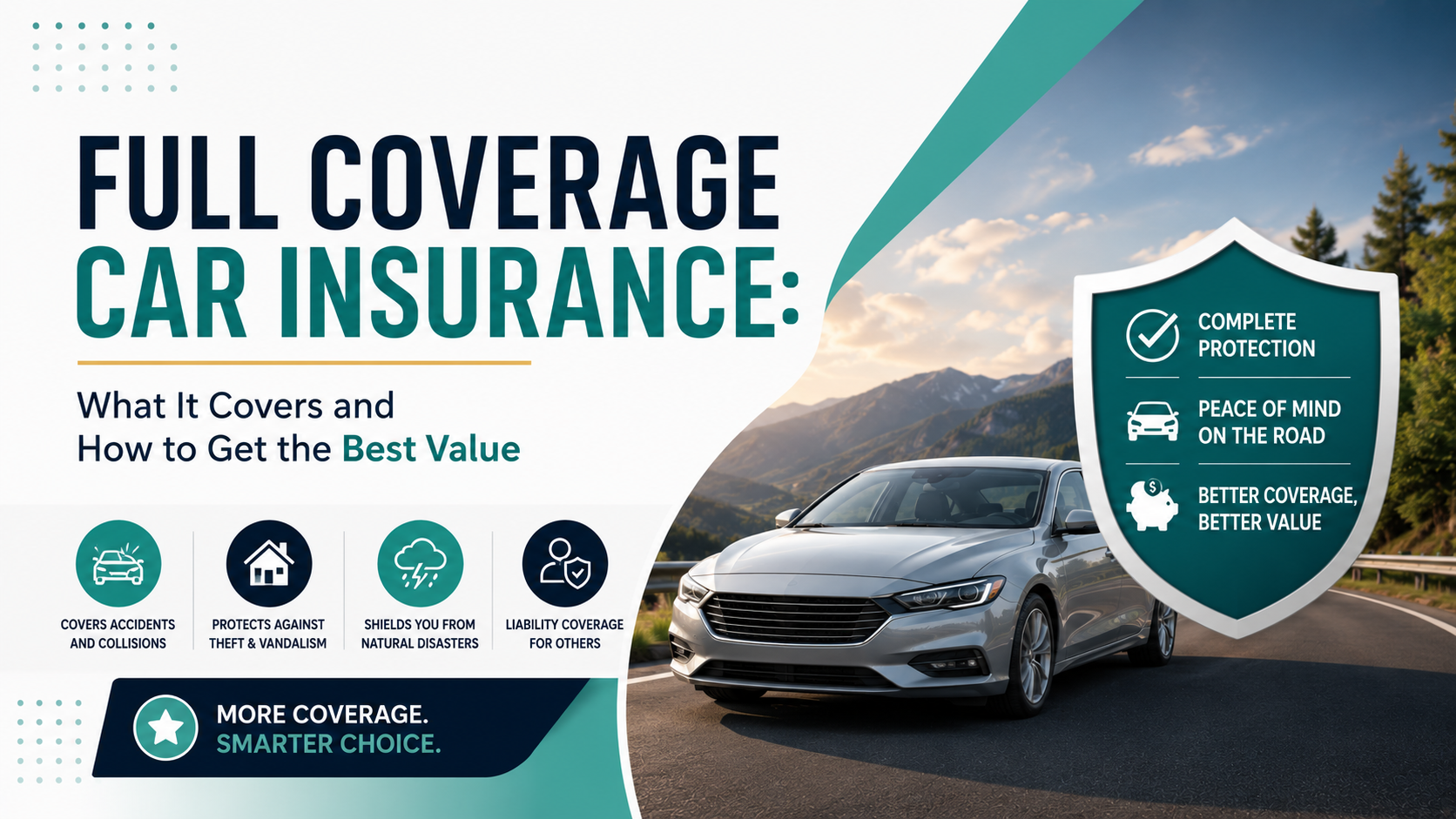
Most drivers assume full coverage car insurance protects them from every possible situation on the road. That’s not always true. The term «full coverage» is widely used, but many policyholders discover coverage gaps only after filing a claim.
Understanding exactly what full coverage car insurance includes can help you avoid expensive surprises and potentially save hundreds of dollars on premiums. Whether you’re comparing auto insurance quotes, shopping for cheap car insurance, or reviewing an existing policy, knowing the details matters.

The Core Problem: Many Drivers Don’t Understand Full Coverage Car Insurance
A common misconception is that full coverage car insurance means unlimited protection against any accident, theft, or damage. In reality, there is no standard insurance policy officially called «full coverage.»
Instead, full coverage car insurance usually refers to a combination of several coverage types:
- Liability insurance
- Collision coverage
- Comprehensive coverage
While this package provides broader protection than basic liability insurance, it still may not cover everything. Medical expenses, rental cars, roadside assistance, and gap insurance often require separate endorsements.
Drivers who assume they are fully protected often discover uncovered losses after accidents, weather-related damage, or vehicle theft.
Key Factors That Affect Full Coverage Car Insurance Costs
Several factors influence how much you’ll pay for full coverage car insurance.
Driving Record
Insurance companies heavily evaluate driving history.
- Clean records typically qualify for lower premiums.
- Speeding tickets increase risk assessments.
- At-fault accidents often lead to substantial rate increases.
- Drivers requiring SR-22 insurance usually face significantly higher premiums.
Vehicle Type
The vehicle itself plays a major role.
- Luxury vehicles cost more to repair.
- Sports cars carry higher accident risks.
- Vehicles with advanced safety features may qualify for discounts.
- High-theft models often have higher comprehensive rates.
Location
Where you live impacts your insurance costs.
- Urban areas generally have higher accident rates.
- Areas with frequent vehicle theft often have higher premiums.
- Local weather risks can increase comprehensive coverage costs.
Credit-Based Insurance Scores
In many states, insurers use credit-related data when calculating premiums.
Drivers with stronger credit profiles frequently receive lower rates compared to those with poor credit histories.
Coverage Limits and Deductibles
Higher coverage limits increase premiums.
Choosing a higher deductible can lower monthly costs but increases out-of-pocket expenses when filing claims.
Full Coverage Car Insurance Comparison Table
| Provider | Average Monthly Rate | Coverage Strength | Pros | Cons |
|---|---|---|---|---|
| State Farm | $140-$190 | Excellent | Strong customer service, broad agent network | Not always the cheapest |
| GEICO | $120-$180 | Excellent | Competitive pricing, easy online quotes | Fewer local agents |
| Progressive | $130-$200 | Very Good | Strong discount options | Rates vary widely |
| Allstate | $160-$230 | Excellent | Extensive coverage options | Higher premiums |
| USAA | $100-$160 | Outstanding | Excellent rates and service | Eligibility restrictions |
Actual premiums vary significantly based on driving history, location, vehicle type, and policy details.
Step-by-Step Guide to Choosing Full Coverage Car Insurance
1. Determine Your Vehicle’s Value
Full coverage car insurance makes the most sense when your vehicle retains substantial value.
For older vehicles worth only a few thousand dollars, collision and comprehensive coverage may cost more than the potential payout.
2. Compare Multiple Auto Insurance Quotes
Never purchase the first policy you find.
Gather quotes from at least three to five insurers. Comparing auto insurance quotes is one of the most effective ways to find better pricing.
3. Review Coverage Limits Carefully
Focus on more than just premium costs.
Evaluate:
- Bodily injury liability limits
- Property damage liability limits
- Collision deductible
- Comprehensive deductible
Lower premiums often come with reduced protection.
4. Look for Discounts
Many insurers offer discounts for:
- Safe driving
- Bundling home and auto policies
- Multi-vehicle coverage
- Defensive driving courses
- Automatic payments
5. Evaluate Optional Coverages
Consider adding:
- Rental reimbursement
- Roadside assistance
- Uninsured motorist coverage
- Gap insurance
- Medical payments coverage
These additions can provide valuable protection in specific situations.
Common Mistakes Drivers Make
Choosing Coverage Based Only on Price
Cheap car insurance can become expensive if coverage limits are too low during a serious accident.
Ignoring Deductible Differences
A policy with a low premium may carry a deductible that creates financial strain after an accident.
Failing to Update Coverage
Life changes can affect insurance needs.
New vehicles, longer commutes, and additional drivers should prompt policy reviews.
Not Comparing Car Insurance Regularly
Many drivers stay with the same insurer for years without comparing alternatives.
Insurance companies frequently adjust pricing models, creating opportunities for savings.
Overlooking Uninsured Motorist Protection
Many accidents involve drivers who carry insufficient insurance. Skipping uninsured motorist coverage can create significant financial risk.
Expert Tips for Saving on Full Coverage Car Insurance
Increase Your Deductible Strategically
Moving from a $500 deductible to a $1,000 deductible often reduces premiums noticeably while maintaining strong protection.
Bundle Insurance Policies
Combining homeowners insurance and auto insurance frequently unlocks meaningful discounts.
Improve Your Credit Profile
In states where permitted, stronger credit histories often lead to lower insurance premiums.
Use Telematics Programs Carefully
Many insurers offer usage-based insurance programs that monitor driving behavior.
Safe drivers may qualify for significant savings.
Shop Before Renewal
Insurance rates change frequently. Request fresh auto insurance quotes before every renewal period to ensure you’re still getting competitive pricing.
FAQ
What does full coverage car insurance actually include?
Full coverage car insurance generally includes liability insurance, collision coverage, and comprehensive coverage. It protects against vehicle damage from accidents, theft, vandalism, fire, weather events, and liability claims when you’re responsible for an accident.
Is full coverage car insurance required by law?
No. States typically require liability insurance only. Full coverage is often required by lenders or leasing companies when a vehicle is financed or leased.
How much does full coverage car insurance cost?
Average premiums vary widely depending on age, driving record, vehicle type, location, and insurer. Monthly costs commonly range from $120 to $250, though some drivers pay significantly more or less.
Should I keep full coverage on an older car?
It depends on the vehicle’s market value. If annual collision and comprehensive premiums approach a large percentage of the vehicle’s value, maintaining full coverage may no longer be financially beneficial.
Final Thoughts on Full Coverage Car Insurance
Full coverage car insurance provides valuable protection, but understanding its limits is just as important as having the policy itself. The right coverage balances affordability with adequate protection against financial loss.
Before purchasing or renewing a policy, compare car insurance options from multiple insurers, review coverage limits carefully, and evaluate whether optional protections fit your situation. A few hours spent comparing auto insurance quotes can lead to better coverage and substantial long-term savings.